


Spraying weeds with a hand-pump bottle is fine for a patio crack. For a whole lawn, a garden bed, an orchard or a fence line, it turns into a very long afternoon. A backpack sprayer puts a few gallons on your back and both hands on the job, and the right one can save hours and a sore arm.
This guide covers six popular options: battery-powered models, manual piston models and a cart-style battery sprayer. For each one it explains what it's good at, where it falls short and who it suits. It also covers the basics people skip: how to calibrate, how to stay safe and how to clean a sprayer so it lasts.
A quick note on affiliate links
This article contains affiliate links. As an Amazon Associate, I earn from qualifying purchases. If you buy through one of these links, I may earn a small commission, and it never costs you a penny more. That income helps keep this site running and lets me keep writing detailed, honest reviews of home, kitchen and garden products.
Quick picks
| Pick | Best for |
|---|---|
| Chapin 63985 battery | Effortless light spraying |
| Field King 190328 | Reliable manual pump |
| Solo 425 | Multiple nozzle options |
| Roundup 190314 | Everyday garden jobs |
| PetraTools battery with cart | Large properties |
| Smith NL400 | Comfort on long jobs |
How these picks were chosen
I looked at what matters in day-to-day use: tank size, how the pump delivers pressure, comfort with a full tank, chemical-resistant seals, how easy each is to fill and clean, how much upkeep each needs, and how much you get for the money. Specs below come from the product listings and the makers and can change, so check the current listing for the exact size and model. Prices change often, so check the current listing before buying. I have not run hands-on tests of these products.
The 6 backpack sprayers, reviewed
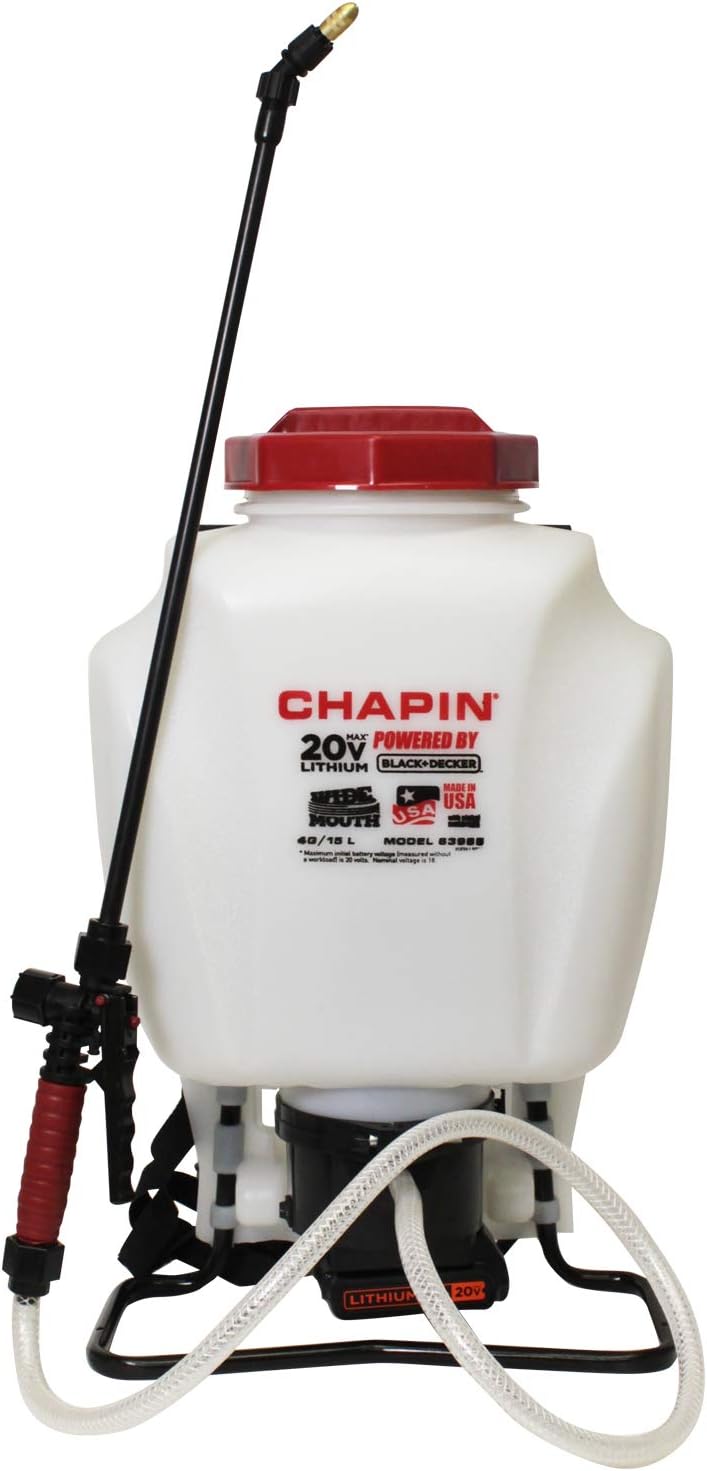
Chapin 63985 20V Battery Backpack Sprayer (Powered by Black + Decker)
- Tank: 4 gal, wide mouth
- Power: 20V Black + Decker battery
- Pressure: About 35 to 40 psi
- Run time: Up to about 1.75 hr / 50 gal
If your arm hurts just thinking about pumping a sprayer, this is the easy alternative. A 20-volt battery drives a diaphragm pump at a steady, fairly gentle pressure, so there's no pumping and no pressure surges. The maker quotes up to about 1.75 hours or roughly 50 gallons per charge, which is plenty for a typical yard or garden, though not for a full day of commercial work. The wide-mouth lid makes filling and rinsing easy, and the seals are Viton. Listed weights vary between retailers from about 10 to 12 pounds empty, and remember that a full 4-gallon tank adds over 30 pounds of liquid.
What's good
- No manual pumping, steady pressure
- Wide-mouth lid for easy filling and cleaning
- Works with Black + Decker 20V batteries
What to watch for
- Pressure is modest, so reach is limited
- Run time is about 1.75 hours per charge, so bring a spare battery for big jobs
- Battery care matters: don't store it on the sprayer or drain it fully

Field King Professional 190328 No-Leak Pump Backpack Sprayer
- Tank: 4 gal
- Pump: Internal piston
- Pressure: Up to about 150 psi (listed)
- Extras: Padded straps, agitator
A traditional manual piston sprayer built for people who spray often. The pump sits inside the tank, so a leaking pump doesn't drip down your back, and the listing describes a built-in agitator and padded, adjustable straps. Manual pumping gives you higher pressure than most battery sprayers, and you decide how hard to work. The catch is effort: you'll pump often on big areas. The listed maximum pressure is a ceiling, not a working setting. Most spraying is done at much lower pressure, so use the lowest that gives good coverage.
What's good
- Internal pump keeps you dry if it leaks
- Higher pressure available on demand
- No batteries to charge or replace
What to watch for
- Manual pumping tires you on large areas
- Heavier when full, so straps and fit matter
- Brass and metal parts need rinsing after use
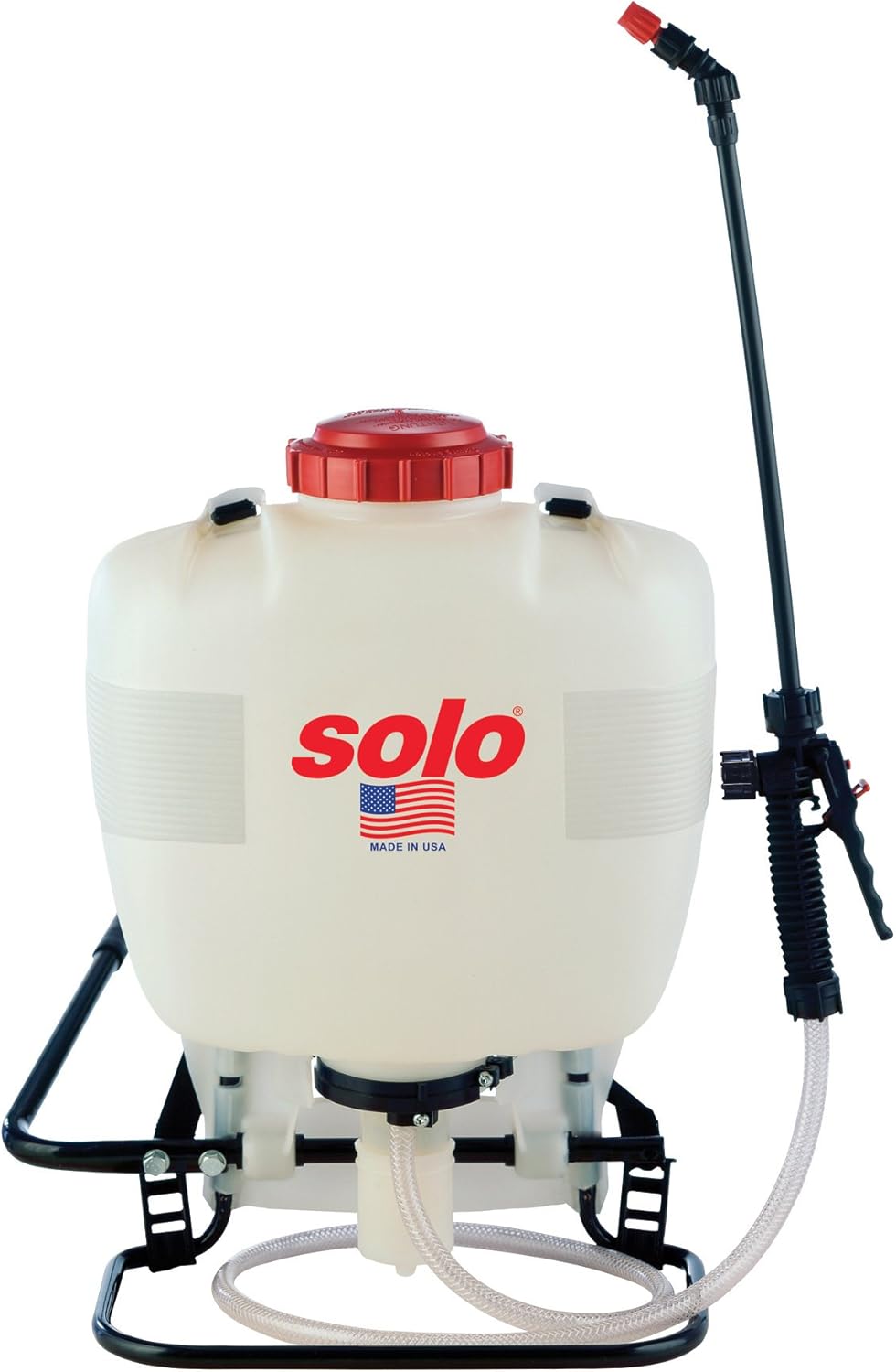
Solo 425 4-Gallon Professional Piston Backpack Sprayer
- Tank: 4 gal
- Pump: Piston
- Pressure: Up to about 90 psi (listed)
- Nozzles: Several included
Solo is a well-known name in sprayers, and the 425 is a straightforward professional-style piston model. The listing describes a pressure regulator and several nozzles, such as jet, fan and cone, so you can switch between spot-treating weeds, broad coverage and misting. Padded straps and a contoured tank help on longer jobs. It's a practical, no-nonsense choice for homeowners with larger properties and small contractors.
What's good
- Piston pump with a pressure regulator
- Several nozzle styles for different jobs
- Familiar brand with parts widely available
What to watch for
- Manual pumping on long jobs
- Lower maximum pressure than some rivals
- No battery option
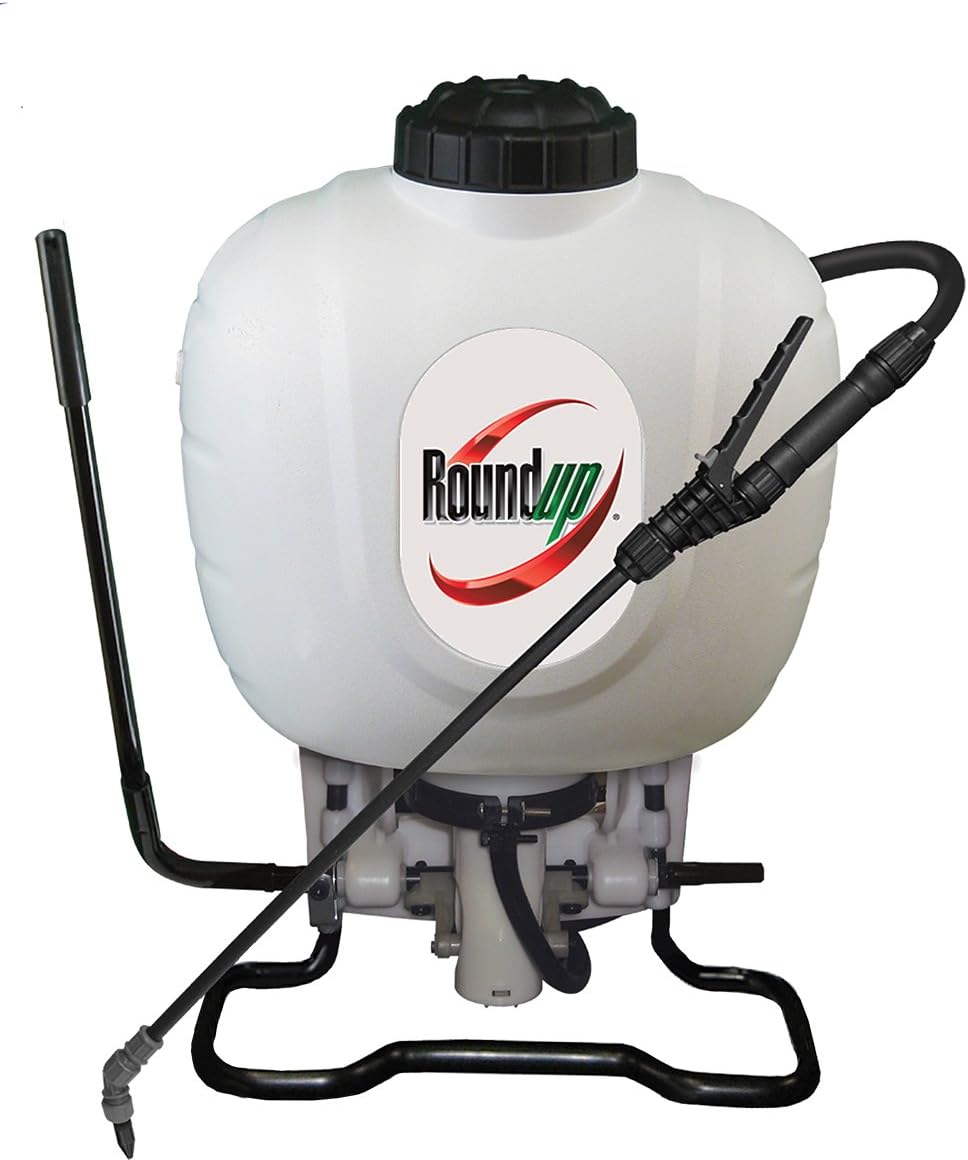
Roundup 190314 4-Gallon Backpack Sprayer
- Tank: 4 gal
- Wand: Poly, with shut-off
- Nozzle: Adjustable brass
- Comfort: Padded straps, waist belt
A middle-of-the-road sprayer aimed at gardeners who treat weeds, apply fertilizer or spray insecticide a few times a season. The listing mentions a poly wand with a shut-off, an adjustable brass nozzle, padded straps, a waist belt and a built-in carry handle. The waist belt is more useful than it sounds: it moves some of the weight off your shoulders when the tank is full. Don't buy it because of the name on the box. Any 4-gallon sprayer with good seals will work with any registered product, as long as you follow that product's label.
What's good
- Waist belt helps carry a full tank
- Adjustable brass nozzle
- Suits general garden chemicals
What to watch for
- Tank can be harder to clean than wide-mouth designs
- Seals need regular checking and rinsing
- Basic features compared with pro models

PetraTools Battery Powered Backpack Sprayer with Cart (4-Gallon)
- Tank: 4 gal
- Power: Rechargeable 12V battery
- Pressure: Adjustable, up to about 90 psi (HD4000 listing)
- Extras: Cart option, several nozzles
Petra makes battery sprayers for larger properties, and the listing also offers a cart so you don't have to carry the tank at all. A big battery is the selling point: the maker of the related HD4000 says it can pump over 200 gallons on a charge, which is far more than the smaller 20-volt units. That means many refills of a 4-gallon tank per charge. Note that these are 4-gallon sprayers, not 100-gallon tanks, so confirm the exact model and what's included before you order, as PetraTools sells several versions. Expect a heavier unit than compact battery models.
What's good
- Large battery for long jobs
- Adjustable pressure and several nozzles
- Cart option takes weight off your back
What to watch for
- Heavier and costlier than basic models
- Check the exact model and what's in the box
- More electronics to maintain
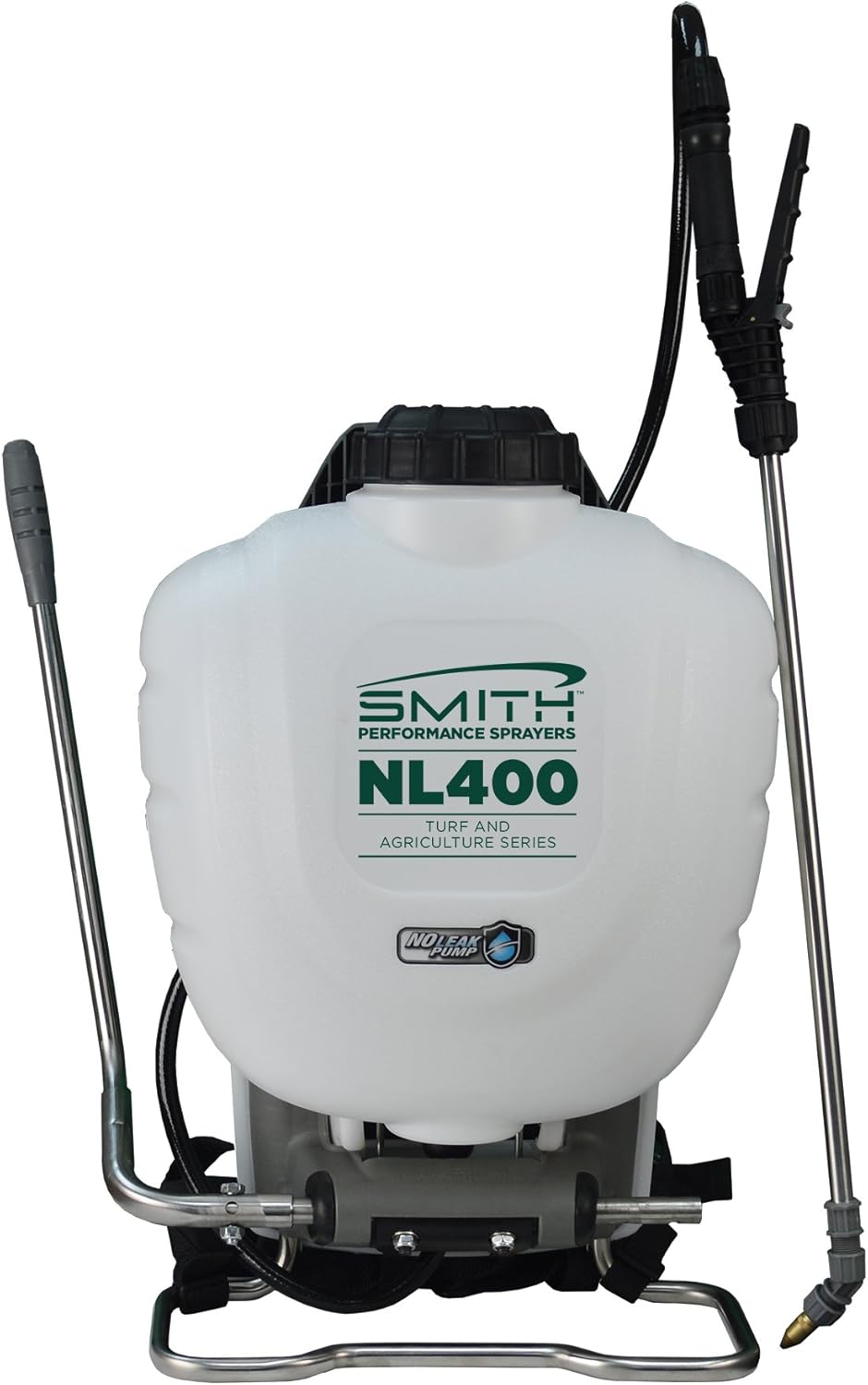
Smith Performance Sprayers NL400 4-Gallon No-Leak Backpack Sprayer
- Tank: 4 gal
- Pump: Internal no-leak
- Pressure: Up to about 150 psi (listed)
- Nozzles: Several, including fan and foam
Smith Performance is a respected name in professional sprayers, and the NL400 is a comfort-focused manual model. The listing describes contoured grips, a teardrop-shaped tank that sits well against your back, padded straps and a set of nozzles including flat fans, an adjustable brass tip and a foaming nozzle. The internal pump keeps leaks off your clothes. If you'll wear a sprayer for an hour at a time, fit and balance matter more than headline pressure, and this one is designed around that.
What's good
- Contoured tank and padded straps for comfort
- No-leak internal pump
- Good selection of nozzles
What to watch for
- Manual pumping still takes effort
- Listed pressure is a maximum, not a working setting
- No battery option
How a backpack sprayer works
The basic idea is simple. A tank sits on your back, a pump pressurizes the liquid, and a hose carries it to a wand with a nozzle. You squeeze a trigger or shut-off valve and the liquid sprays out. Where models differ is in how the pump works and what powers it.
Manual piston pumps
You work a lever with one hand while spraying with the other. Piston pumps are durable and can reach higher pressures than most battery models. They're a good choice if you spray often and want something simple with no batteries.
Manual diaphragm pumps
Common on cheaper sprayers. They're simple but generally deliver lower pressure and can wear faster with harsh chemicals. Fine for occasional garden use.
Battery-powered pumps
A motor does the pumping, so you just squeeze the trigger. Pressure is steady, and your arm stays fresh. The trade-offs are cost, battery life and weight. Basic 20-volt models run for around an hour and a half per charge, while larger-battery models like the PetraTools last much longer.
Cart-mounted sprayers
Some battery models come with a cart, so you wheel the tank instead of carrying it. That helps on flat, open properties and if carrying 30-plus pounds isn't practical.
What to look for when buying
Tank size and weight. Four gallons is the most common size, and it makes sense for most homeowners. Remember that water weighs about 8.3 pounds per gallon, so a full 4-gallon tank carries roughly 33 pounds of liquid on top of the sprayer's own weight. If you have back or shoulder trouble, consider a smaller tank or a cart.
Straps and fit. Wide padded straps, a chest or waist strap and a shaped tank make a big difference over an hour of use. If possible, choose a sprayer that spreads weight across your hips.
Pressure. Higher isn't better. For most weed and garden spraying, you want moderate pressure that gives coverage without misting into the wind. Very high pressure creates fine droplets that drift. Look for a sprayer that lets you adjust or regulate pressure.
Nozzles. A cone nozzle suits general foliage spraying, a flat fan suits even coverage on the ground and a straight stream reaches far or targets a spot. Having several options lets you use the same sprayer for different jobs.
Seals and materials. Viton seals resist many chemicals, and a polyethylene tank resists corrosion. If you plan to use unusual or strong products, check the sprayer's chemical compatibility in the manual.
Wide-mouth lid and filter. A wide opening makes filling, mixing and rinsing much easier. A built-in filter helps prevent nozzle clogs.
Wand length and hose. A longer wand saves bending and helps you reach under shrubs or along fences. Make sure the hose is long enough not to pull on the tank.
Battery details. For battery models, check how long a charge lasts, how long it takes to recharge, whether the battery works with tools you already own and whether you can buy spares.
Which type suits you?
| Your situation | Best type |
|---|---|
| Small yard, a few sprays a season | Basic manual sprayer, such as the Roundup |
| Regular use, want reliability | Manual piston, such as the Field King, Solo or Smith |
| Arm fatigue or frequent use | Battery-powered, such as the Chapin 63985 |
| Large property or long sessions | Large-battery model, such as the PetraTools with cart |
| Back or shoulder problems | Cart-mounted or smaller tank |
Calibrating your sprayer
Product labels tell you how much chemical to mix per gallon or per area, but that only works if you know how much your sprayer applies. Calibration sounds technical, but a simple version takes ten minutes.
- 1. Mark out a test area. Measure a patch of about 1,000 square feet, for example 20 by 50 feet.
- 2. Fill the tank with plain water. Note the level, or start with a known amount.
- 3. Spray the area at a normal walking pace. Keep the nozzle height and pressure the way you'd use them for real.
- 4. Measure how much water you used. Refill to the starting level and note how much it took.
- 5. Use the label rate. If the label gives a rate per 1,000 square feet, mix that amount into the volume you'd use for the same area.
Repeat once or twice, since walking speed varies. If you want to apply evenly, the pace matters as much as the pressure. Always follow the specific product label, since rates and methods vary.
Using it safely
Many sprayed products are chemicals, and the label is the law. A few habits keep you and your garden safe:
- Read the label first. It tells you how to mix, where you can use the product and what protective equipment to wear.
- Wear protection. At minimum, gloves, long sleeves and pants, closed shoes and eye protection. Some products call for more.
- Check the wind. Spray on calm days to avoid drift onto desirable plants, neighbors and water.
- Keep clear of water and drains. Don't spray near ponds, streams or storm drains unless the label says it's allowed.
- Mix outdoors or in a ventilated space. Don't mix in a kitchen or anywhere food is stored.
- Never overfill. Leave headroom, and use the tank's gallon marks.
- Keep children and pets away until the product has dried or the label says it's safe.
- Depressurize before opening the tank. Release pressure before removing the lid.
- Store chemicals properly. Keep them in original containers, out of reach of children.
It's also wise to keep one sprayer only for herbicides. Even tiny residues can damage plants if you later use the same sprayer for fertilizer or fungicide. Label it clearly.
Cleaning and maintenance
Rinse after every use. Fill the tank with clean water, spray it through the wand and repeat. Do this in an area where runoff won't harm plants or waterways, such as an unused patch of lawn.
Clean the filter and nozzle. Remove and rinse the filter screen and tip. A soft brush clears stubborn residue. Never blow through a nozzle with your mouth.
Check seals and o-rings. Look for cracks, swelling or dryness. Replacing them is cheap and prevents leaks.
Lubricate as directed. Some manual pumps need a little silicone grease on seals. Follow the manual.
Store it properly. Let it dry, leave the lid slightly loose so air circulates and store it out of direct sun and away from freezing temperatures.
Battery care. Follow the maker's advice. For the Chapin 63985, for example, the seller notes not to store the battery on the sprayer and not to let it drain completely, because a fully dead battery may not recharge.
Winterize. Drain the tank, hose and wand completely before freezing weather to avoid cracks.
Tips for better spraying
Mix only what you need. Leftover mix is waste and a disposal problem.
Keep a steady pace and nozzle height. Uneven walking leads to uneven coverage.
Overlap passes slightly. It prevents missed stripes.
Agitate when needed. Some products settle, so shake the tank or use a sprayer with an agitator.
Use the right nozzle. Fan for broad coverage, cone for foliage and a jet for spot treatments.
Spray at the right time. Early morning or late afternoon is often better than midday heat, and the label may give specific timing.
Test with water first. It shows you the spray pattern, any leaks and how it feels to carry.
Common mistakes
- Buying for pressure alone. Comfort, fit and nozzle options matter more for most people.
- Skipping the label. Rates and safety rules vary between products.
- Spraying in wind. Drift damages plants and can harm people and pets.
- Not rinsing. Residue clogs nozzles and corrodes parts.
- Using one sprayer for everything. Herbicide residue can kill plants you meant to feed.
- Overfilling. It makes the sprayer heavy and prone to leaks.
- Ignoring the weight. A full 4-gallon tank is heavy, so use a good fit or a cart.
Frequently asked questions
Is a battery sprayer better than a manual one?
Battery sprayers are easier on your arm and deliver steady pressure, but they cost more and need charging. Manual piston sprayers are simple, durable and cheaper. The best choice depends on how often and how long you spray.
How big a tank do I need?
Four gallons suits most homeowners. If you spray small areas, a smaller tank is lighter. For very large properties, consider a battery model with a cart.
How much does a full backpack sprayer weigh?
Water weighs roughly 8.3 pounds per gallon, so 4 gallons is about 33 pounds of liquid plus the sprayer's own weight, often 10 to 13 pounds.
What pressure do I need?
For most garden and weed work, moderate pressure is enough. Very high pressure can cause fine mist that drifts. Choose a sprayer with adjustable pressure or a regulator if you can.
Can I use the same sprayer for herbicides and fertilizer?
It's best not to. Even small herbicide residues can damage plants. Keep a dedicated sprayer for herbicides and label it.
What are Viton seals?
Viton is a synthetic rubber that resists many chemicals, so it's often used for seals in sprayers. Always check the manual for chemical compatibility.
How do I stop my sprayer from leaking?
Check the lid, o-rings, hose connections and wand fittings. Replace worn seals and don't overfill. Internal-pump designs keep pump leaks inside the tank.
How long does a battery sprayer run?
It varies. A 20-volt model like the Chapin 63985 is quoted at up to about 1.75 hours per charge, while larger-battery sprayers can run much longer. Check the specific model's listing.
The bottom line
For occasional garden jobs, a simple manual sprayer such as the Roundup does the job. If you spray regularly and want durability, the Field King, Solo and Smith piston models are dependable, and the Smith is designed with comfort in mind. If pumping wears you out, the Chapin 63985 gives you effortless light spraying, and for big properties or long sessions, a larger-battery model like the PetraTools is worth the extra cost.
Whichever you choose, read the label, calibrate once, spray on calm days, rinse after every use and treat that 33-pound tank with respect. Do that, and a backpack sprayer will save you a lot of time and effort.


No comments:
Post a Comment